Is Thumbtack & Bark Worth It For Photo Booth Owners? What Real Owners Are Saying
Ask a room full of photo booth owners about Thumbtack or Bark and you'll get two kinds of answers. Most people groan. A smaller group quietly says these sites have brought them some of their best clients. We read through hundreds of posts and comment threads in three busy photo booth owner communities to find out what separates the two groups, what the platforms actually cost, and how the owners who profit from them run their accounts.
How The Two Platforms Charge
Both sites are pay-per-lead marketplaces. A customer posts a request, and vendors spend credits to respond. Neither site sells a lead exclusively. Thumbtack lets up to five pros quote the same request, and Bark sells the same lead to several other photo booth companies. You're paying to enter a bidding contest, not to get a customer, and the cheapest quote often wins. The details matter, though, and owners point to a few key differences.
Thumbtack
- Owners say Thumbtack has charged for leads that match your preferences whether or not you choose to respond, though it has also tested refunding quotes the customer never views and charging only when the customer replies.
- Photo booth requests typically cost 3 to 4 credits each. One owner estimated a four-credit lead at about $12 in their market, and others report "high value" leads running $20 to $24.
- Several owners warn that credits bought through the phone app cost noticeably more (one estimate was 25%+) than credits bought on the website.
- The platform changes often. Over the years owners have seen it add a customer budget field, remove it, publish "average price" guides, and announce price increases for photo booth leads (one owner shared an 8% increase notice).
Bark
- You choose which leads to respond to and pay only when you do.
- You buy credits in blocks, so money can sit tied up in unused credits.
- Owners report paying up to $24 to respond to a lead.
- Bark provides the customer's email and phone number once you respond, which owners say makes follow-up easier.
- Many owners first hear of Bark through a stream of emailed "leads" they never signed up for, sometimes six to ten a day, which leaves a lot of them suspicious from the start.
The Numbers Owners Have Shared
The most useful posts in these groups are the ones where owners tracked their results. One owner logged a full year on both platforms side by side:
| Bark | Thumbtack | |
|---|---|---|
| Leads paid for | 94 | 126 |
| Total spent | $1,022 | $1,501 |
| Cost per lead | $10.87 | $11.91 |
| Hires | 5 | 18 |
| Hire rate | 5.3% | 14.3% |
| Revenue per $1 spent | $1.96 | $5.04 |
That owner also found that several Thumbtack clients became repeat, annual rentals. The conclusion was to close the Bark account and move that budget elsewhere. Bark customers seemed more price-focused, and many requests had no event date at all.
Another owner compared Thumbtack before and after one of its pricing changes. Customer acquisition cost jumped from about $17 to about $102 per booking, and return fell from roughly $32 per dollar spent to under $4, with no change in how the owner quoted.
More recent reports are mixed:
- One owner set a $150 weekly cap and hit it in three days. Seven inquiries came in, two replied, and both said they'd gone with someone cheaper.
- Another spent $100 over three weeks, including some deliberately low quotes, and got zero replies.
- One owner bought 100 Bark credits and reported that none of the contacted customers answered emails or calls.
The success stories are real too:
- One owner spent $80 on Bark credits and booked four events at normal rates, well above the listed budgets, closing four of ten contacts.
- Another bought four Bark leads in a month. The first became a contract worth over $5,000, two more went to proposal, and only one was a bargain hunter.
- One owner started on Thumbtack with zero reviews and reported 33 reviews and about $26,000 in profit within the year.
- Others described a $200 request that grew into a $1,600 job once they offered décor and extra services, a three-day corporate event at over $115 an hour, and single bookings of $6,700 and $6,800.
The Complaints You'll Hear Most
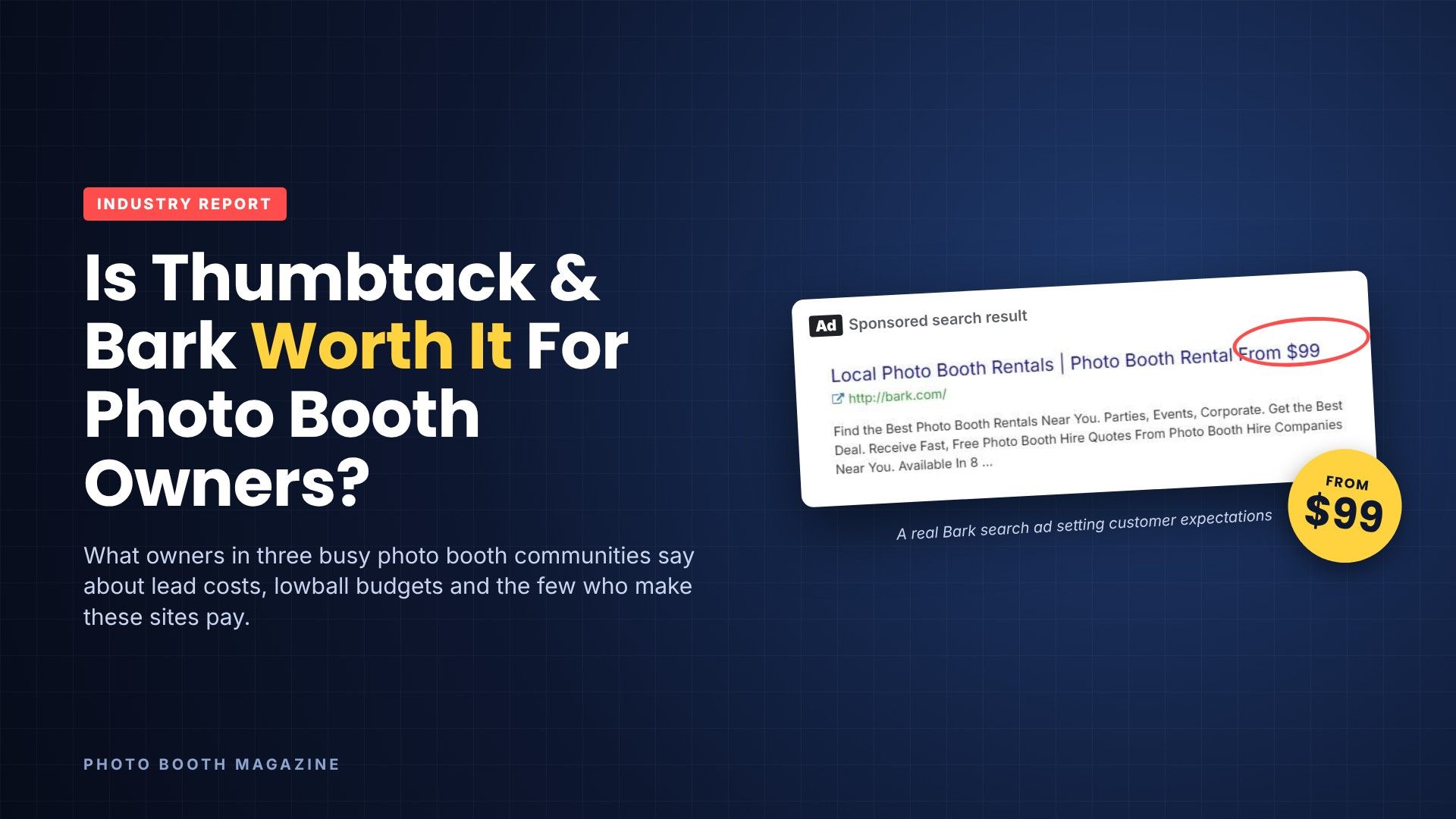
- Budgets that don't match the work. Owners regularly post requests like six hours for 50 guests at $250, or a seven-hour wedding with a $300 maximum. Many blame the platforms' own published "average price" figures, often $300 to $500, for setting unrealistic expectations. Bark adds to the problem with Google ads telling customers they can rent a photo booth for as little as $99. Customers who click those ads expect that price, which sets the bar far below what a professional rental costs.
- Ghosting. Owners consistently report that half or more of their quotes are never viewed, and that customers who do reply often vanish after one message.
- Leads that aren't real. Some owners suspect the platforms send bogus requests to burn credits. One Bark lead told the owner they had only been testing how to post a request. Others have been targeted by check-overpayment scams that started as booking requests.
- Paying twice for one customer. One owner was charged for a customer's direct message and again when the same customer marked them as "interested."
- Constant rule changes. Owners who did well early on say results dropped as the pricing model, credit costs and lead format kept changing.
- Competing against discounters. New vendors find themselves up against profiles with dozens of reviews, and against owners willing to quote $200 for four hours.
- Discounting regret. One owner cut $150 off their regular price for a first Thumbtack booking, then arrived to find a lavish, clearly well-funded wedding.

What The Owners Who Make It Work Do Differently
The owners who profit from these sites describe nearly the same playbook.
- Be as picky as the customer. Skip most requests. The best candidates are corporate events (often an office manager or marketing lead doing a quick vendor search), a budget that fits the hours requested, and a firm date and schedule. Ignore the "$250 for ten hours" requests without a second thought.
- Avoid last-minute requests. Customers booking two or more weeks out are still comparing quality. Next-day requests usually mean the customer will hire whoever answers first and cheapest.
- Use it as filler, not a foundation. Several owners only quote weekday or off-peak dates. As one put it, a Saturday in December isn't worth buying a lead for when you'll sell out anyway.
- Quote your real price. Don't chase the posted budget. If your quality isn't visibly different from the other four vendors, the customer will pick the cheapest, so your profile and response have to show the difference.
- Ask questions before quoting. Some owners only bid on requests that let them ask follow-up questions, because good questions show experience and separate you from template quotes.
- Respond fast and follow up. Thumbtack in particular rewards speed. Owners who win say they follow up persistently and get the customer on the phone as soon as possible.
- Be candid about what cheap gets them. One owner sends Bark leads a blunt message explaining what low-cost booths usually deliver and inviting them to work together directly. It closed 40% of a ten-lead test at nearly double the listed budgets.
- Upsell. Several big wins started as small requests that grew once the owner offered extra services.
- Set a budget and track it. Cap weekly spend, treat it as a test, and calculate cost per booking. Buy Thumbtack credits on the website rather than the app, and use the pause or hide feature during busy stretches.
- Protect yourself. Verify customers by phone, and don't accept checks from first-time clients.
Where These Sites Fit In A Marketing Plan
When owners rank their lead sources, Thumbtack and Bark usually land near the bottom. One owner's list went: referrals (near-certain close), wedding open houses, paid social and local wedding groups, The Knot and WeddingWire, then Bark and Thumbtack ("don't waste your money"). Another ranked The Knot and WeddingWire first if you have page-one placement and reviews, Thumbtack second if you're priced below most competitors, and Bark third for having lots of leads that rarely respond.
A recurring point in these groups is that the easiest channels to join attract the most competition, and that's where prices get pushed down. Owners who've built premium businesses credit local SEO, referral relationships with venues and planners, and their own brand. One widely shared story described going from about $400 per event on Thumbtack leads to around $4,000 per event after mastering local search and building a brand couples actively seek out.
The Bottom Line
Thumbtack and Bark aren't scams, and they aren't gold mines. For a new booth with no reviews or referral network, they can bring early bookings and reviews. For an established business, they work best as a small, tightly managed source of weekday and corporate work. The owners who lose money tend to quote every request, match low budgets and hope for volume. The owners who profit quote rarely, price confidently, move fast and track every dollar.
Before you buy credits, ask yourself:
- What's my maximum weekly spend, and what cost per booking makes it worthwhile?
- Which event types and dates am I actually trying to fill?
- Am I prepared to quote my real price and lose most bids?
- Do I have a fast, personal follow-up process ready?
This article reflects experiences photo booth owners shared in online industry communities over several years. Both platforms change their pricing and lead rules often, so check current terms before you commit a budget. Have your own Thumbtack or Bark results to share? Post what you're seeing in the Photo Booth Magazine Facebook group.